How to Expand Your Vocal Range by 3-6 Notes Safely
By: Nord Time Editorial
Fact checked by: QA Team
Updated on: September 25, 2026
0
85
10 min
In this article
- Understanding Vocal Range
- How Vocal Range Works
- Benefits and What The Evidence Shows
- How To Get Started
- Common Mistakes and Considerations
- FAQ

Testing reveals that hobbyist singers and choir participants often feel stuck when their voice cracks on favorite songs. Many are also unsure what voice type fits them best for group performances.
This guide walks through clear ways to measure your vocal range using simple tests and understand the underlying anatomy. Users report lasting confidence boosts once they learn to blend registers smoothly and pick the right repertoire.
Understanding Vocal Range
Users report plenty of confusion around what their vocal span really means for everyday singing. This section breaks it down with practical details tailored to aspiring singers, karaoke fans, and voice students.
Understanding the foundation makes training more effective. It also prevents the frustration of trying to sing material outside your current capabilities.
What Vocal Range Means and Why It Matters
Uncertainty about personal voice type often restricts song choices and limits confidence during performances. Vocal range is simply the notes you can hit from lowest to highest.
Untrained adults typically span 1.5 to 2.5 octaves, while trained singers reach 2.5 to 4 octaves. Knowing your exact limits helps match repertoire to avoid strain at register breaks.
Testing reveals this knowledge opens up new choir or audition opportunities for hobbyists. It takes the guesswork out of finding songs that naturally flatter your unique tone.
Standard Voice Types and How They Apply
Standard systems give concrete benchmarks for group and solo singing. Choir participants often rely on these classifications for harmony arrangements.
| Voice Type | Typical Range |
|---|---|
Soprano | C4 to C6 |
Alto | F3 to F5 |
Tenor | C3 to C5 |
Baritone | A2 to A4 |
Contemporary pop singers focus more on mixed voice for smooth delivery rather than strict classical categories. Knowing your fit reduces the pain of limited performance options.
Range Versus Tessitura for Real-World Use
Range covers your full span, but tessitura is the comfortable sweet spot where tone stays strong without fatigue. Users report cracking less often once they prioritize tessitura over chasing extremes.
A practical takeaway is that control and consistent tone matter more than total notes for most recreational singing situations. Staying within your tessitura ensures stamina during longer performances.
Now that the basics make sense, let's look at how the body produces these pitches. The mechanics define how we safely shift between registers.
How Vocal Range Works
The science behind pitch is straightforward once you see the moving parts. Simple awareness of anatomy helps singers control their voice without forcing it.
Visualizing these mechanisms prevents common habits that lead to vocal fatigue. It turns abstract singing advice into concrete physical adjustments.
Vocal Folds, Larynx, and Pitch Production
Pitch comes from the vibration of the vocal folds in the larynx. Length, thickness, and tension determine the exact frequency produced.
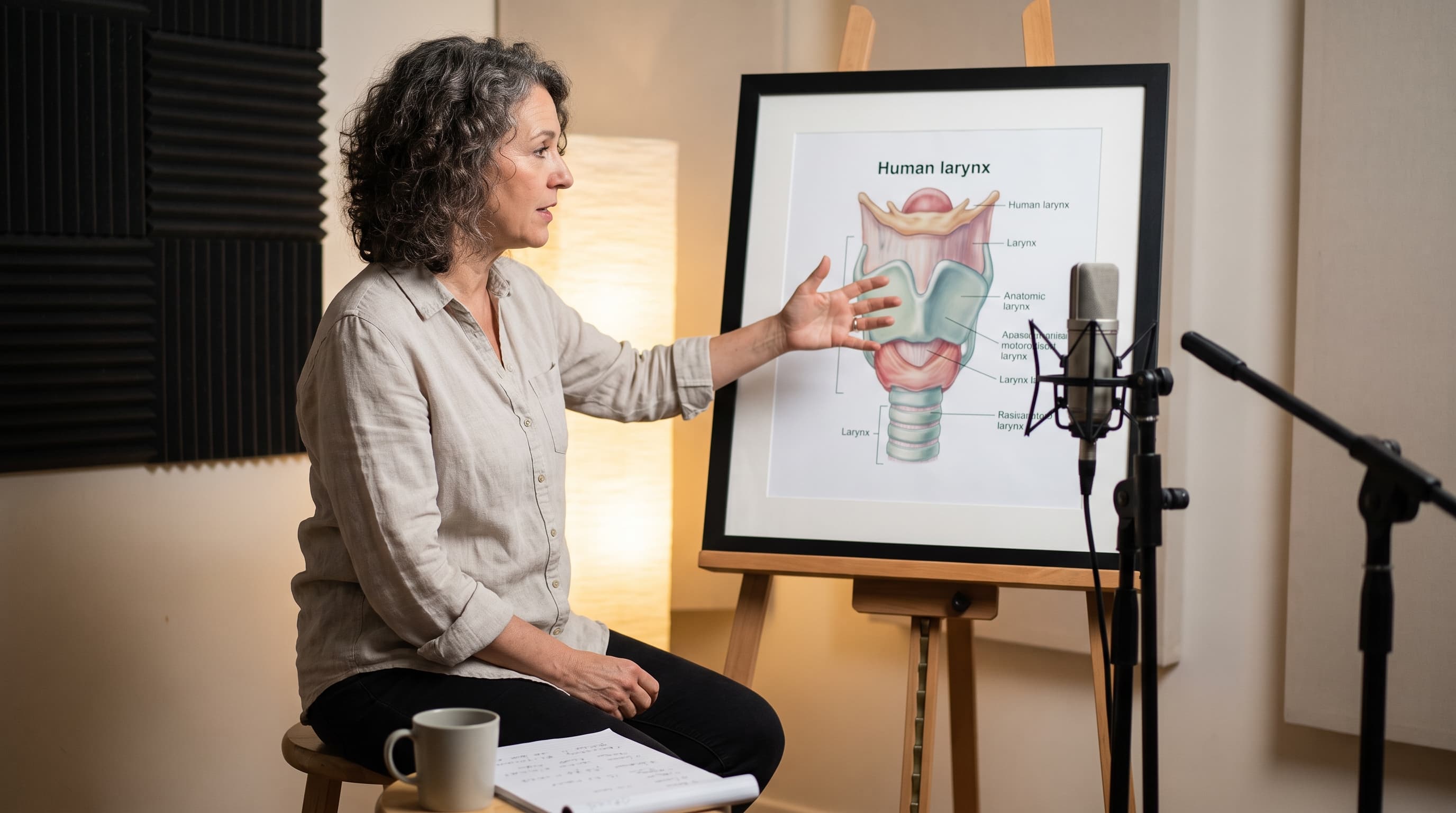
Longer and thicker folds create lower frequencies, which is why adult males post-puberty typically sit in lower registers. The cricothyroid muscle lengthens and tenses folds for high notes while the thyroarytenoid shortens them for lows.
Users report less strain once they understand this coordination instead of pushing extra air. The correct muscle engagement does the heavy lifting.
Registers, Passaggio, and Smooth Transitions
Registers like modal chest voice and head voice involve distinct vibratory patterns and vocal tract shapes. The passaggio marks those register breaks where many hobbyists experience cracks.
A 2025 double-case study using Voice Range Profile showed singers maintaining specific modes across more than three octaves. Practical blending turns tricky transition spots into seamless performance tools.
Instead of flipping abruptly, mastering the passaggio creates a unified sound. This smooth connection is the hallmark of professional technique.
The Vocal Tract as Resonator and Efficiency Tool
The pharynx, mouth, and nasal cavities act as resonators that shape timbre and boost projection. Semi-occluded vocal tract exercises, such as straw phonation, balance airflow safely.
Utilizing these natural resonators provides several key performance advantages for modern singers.
Benefits of Efficient Resonance
- Safer extension — reduces injury risk during high notes
- Airflow balance — prevents breathy or pressed tone
- Volume boost — increases projection without vocal fold strain
Testing reveals this setup lets contemporary singers expand efficiently. Understanding these mechanics sets up the next part covering real training evidence.
Benefits and What The Evidence Shows
Expanding range is not about flashy party tricks. Research backs steady improvements in control, tone, and vocal health when you train smart.
Consistent practice physically alters how effectively the body handles air pressure and resonance. The data highlights measurable gains across all skill levels.
How Training Safely Adds Notes
Longer singing training increases physiological frequency range, especially in high notes. This corrects the misconception that vocal limits are completely fixed by anatomy.
A study of 162 female singers in Folia Phoniatrica et Logopaedica showed significant range extensions compared to first-year students. Better coordination and technique unlock usable notes.
Users report gaining 3 to 6 notes over months boosts performance options without damage. The key is allowing the muscles to adapt gradually.
Breath Support and Pitch Stability Gains
Switching to diaphragmatic-abdominal breathing expanded average pitch range from roughly 93 Hz to 189 Hz in a 2024 study. Hobbyists notice more stable pitch and less laryngeal strain once posture clicks.

Testing reveals these fundamentals help blend chest and head voice smoothly. Consistent breath support maintains tone across all musical genres.
When the diaphragm controls the airflow, the throat muscles can relax entirely. This lack of tension directly increases the high-end span.
Voice Health Improvements from Targeted Exercises
Vocal Function Exercises show positive effects on voice parameters with no adverse outcomes. A systematic review in the Journal of Voice confirms benefits for both everyday speech and professional voices.
Research Insight
Targeted vocal function routines deliver measurable improvements in pitch stability and stamina across varied age groups without risking injury.
Users report stronger confidence and reduced fear of vocal damage. The research is encouraging, so turning it into action requires a structured routine.
How To Get Started
You do not need a recording studio or expensive coach to begin. These steps use simple tools and consistent short sessions to build progress safely.
Creating a reliable habit is more important than pushing for immediate results. Daily dedication sets the foundation for lasting vocal growth.
Accurately Testing Your Current Range
Start at middle C on a piano or a free pitch app. Sing a sustained 'ah' downward to your lowest clean note and record the pitch.
Repeat the process sliding upward, noting only the pitches held cleanly for at least 3 seconds. This method gives hobbyists a reliable baseline before attempting to add notes.
Testing reveals most people discover they already sit in a usable two-octave span. Documenting this starting point makes future progress easy to track.
Building a Safe Daily Warm-Up Routine
Begin every session with 3 to 5 minutes of gentle lip trills or humming. Add straw phonation glides and 5-note scales on light 'woo' sounds.
Consistency of 15-minute sessions five days per week typically yields 1 to 3 extra notes in a few months. Here is a standard sequence to follow:
Daily Warm-Up Sequence
- Physical stretch — release tension in the neck, jaw, and shoulders
- Gentle humming — wake up the vocal folds with low-impact vibration
- Lip trills — balance air pressure through the tricky passaggio areas
- Scale glides — map out the comfortable tessitura for the current day
Using Tools and Progressing Without Strain
Try digital pitch tracking apps as a practical example for monitoring your daily output. Focus on smooth passaggio transitions rather than chasing extremes.
Record yourself to catch any breathiness or tension early in the process. Cool down with descending hums and stop immediately if pain appears.
These routines work effectively when applied with patience. Avoiding a few common traps keeps your voice healthy for the long haul.
Common Mistakes and Considerations
Even eager singers trip over the same vocal health issues. Spotting these pitfalls early lets you train smarter and enjoy the process.
Progress requires pacing, and rushing through steps often leads to regression. Recognizing bad habits is half the battle.
Skipping Warm-Ups or Pushing Too Hard
Many report voice cracking after jumping straight into high notes. The myth that you must strain for higher pitches is entirely false.

Proper breath support and exercises like straw phonation allow extension without brute force. Always prioritize moderate volume and a relaxed tone to protect your vocal folds.
If your throat feels tight or scratchy, you are likely pushing too much air. Backing off the volume usually resolves immediate tension.
Chasing Myths Instead of Realistic Goals
The four-octave myth sets unrealistic expectations for daily practice. Most trained singers work comfortably within 2.5 to 3 octaves on stage.
Famous extreme ranges are outliers, not daily targets for healthy singing. Users report better results focusing on a usable performance range.
Comparing yourself to studio recordings often leads to frustration. Focus on maximizing the quality of the notes you already possess.
Ignoring Age, Health, and When to Seek Help
Hormones, age, or smoking can shift your natural pitch span over time. Shorter sessions and extra hydration help modify routines for changing health conditions.
Consult a voice therapist or ENT at any sign of persistent strain or hoarseness. These tips help you steer clear of setbacks while you keep growing.
FAQ
What is the average vocal range for men and women?
Untrained adults typically span 1.5 to 2.5 octaves depending on natural anatomy. Adult males often sit around 85 to 180 Hz speaking fundamental, while females sit much higher.
Trained singers commonly reach 2.5 to 4 octaves safely. Consistent practice adds 3 to 6 notes without needing to compare yourself to professional outliers.
How do I find my vocal range without a piano?
Free smartphone apps that play reference tones work well for self-assessment. Start in a comfortable mid-range and slide downward, then repeat the process sliding upward.
Sustain each note for at least 3 seconds cleanly to verify true control. The goal is identifying usable notes rather than squeaking out extremes.
Can you actually increase your vocal range and how?
Yes, evidence shows that the usable span expands with training via better technique. A recent study found longer training significantly boosted high-frequency capability.
Daily 15-minute sessions with sirens, lip trills, and diaphragmatic breathing yield measurable gains. Stress gradual progress and stop immediately at any sign of discomfort.
What are the standard ranges for soprano, tenor, and baritone?
Operatic standards place soprano from C4 to C6 and tenor from C3 to C5. Baritone typically spans A2 to A4 in classical vocal benchmarks.
Contemporary singers often use overlapping mix voice for pop and rock genres. Testing reveals most hobbyists land near these categories but should prioritize their comfortable tessitura.
How many octaves is a good vocal range?
A solid usable span lands between 2 and 3 octaves for most recreational singers. Famous examples like five-octave spans are not realistic goals for the average person.
Control within your tessitura and smooth register transitions matter far more than sheer numbers. Training consistently delivers satisfying and reliable vocal control.
What is the difference between vocal range and tessitura?
Range is your full lowest-to-highest note span, including extremes. Tessitura is the comfortable portion where your voice sounds best with the least effort.
Many report that singing outside their tessitura causes quick fatigue or strain. Choosing songs that sit mostly in your tessitura prevents vocal damage over long sets.
How do I sing higher notes without cracking or straining?
Focus on breath support, resonance, and gradual exercises like straw phonation to balance pressure. Practice sirens starting mid-range and expand outward only when stable.
Record yourself, keep volume moderate, and always warm up for 5 minutes. This dedicated approach builds smooth transitions at the difficult passaggio.
Are famous singers' vocal ranges realistic goals?
Most celebrity spans are exceptional outliers shaped by genetics, years of intense training, and studio magic. Testing reveals the average singer gains 3 to 6 notes safely.
Focus on your own progress, tone quality, and enjoyment. The evidence celebrates control and artistry over raw span for long-term vocal health.
Related Articles

How Long Does It Take to Learn Piano as an Adult: Your Positive 12-Month Roadmap to Songs and Brain Health
Entertainment5 min read

Best Digital Piano for Beginners in 2026: 15 Minutes Daily for Brain Health and Stress Relief
Entertainment5 min read

Head Voice vs Chest Voice: A Positive 2026 Guide to Seamless Blends for Aspiring Singers
Entertainment5 min read

Piano Chords for Beginners: 15-Minute Daily Routines for Brain Health and Playing Favorite Songs
Entertainment5 min read

Vocal Warm Up Guide: Step-by-Step Routines From 5 to 20 Minutes for Stronger Singing
Entertainment5 min read

Piano Sheet Music For Beginners: How Short Sessions Build Focus
Entertainment5 min read
Comments
(0)Leave a comment
Your email will not be published. All fields are required.