Head Voice vs Chest Voice: A Positive 2026 Guide to Seamless Blends for Aspiring Singers
By: Nord Time Editorial
Fact checked by: QA Team
Updated on: September 24, 2026
0
4
12 min
In this article
- Understanding Head Voice vs Chest Voice
- How It Works
- Benefits and What the Evidence Shows
- How To Get Started
- Common Mistakes and Considerations
- FAQ

Many amateur singers face frustrating voice cracks and a limited vocal range that holds them back during rehearsals. These sudden flips disrupt favorite songs and make hitting high notes feel like a gamble.
Understanding head voice vs chest voice delivers clear physiological explanations and practical daily exercises. This guide explores positive strategies to build a mixed voice without unnecessary vocal strain.
Consistent practice helps singers of all experience levels expand their usable range effectively. Vocalists can perform with greater confidence across pop, musical theater, and other contemporary genres.
Understanding Head Voice vs Chest Voice
Users report plenty of frustration when a sudden flip disrupts their favorite songs during a performance. Grasping the core differences sets aspiring singers up for real progress.
This section grounds hobby vocalists and voice students in what each register actually does. Knowing why blending them matters improves daily practice and live stage performances.
Chest Voice Basics
Testing reveals chest voice uses TA muscle dominance with thick vocal folds vibrating their full length. They act much like thick guitar strings to produce sound.
This delivers a rich, grounded tone felt in the chest up to around 300 Hz or D4. This register powers everyday speaking and low belting in pop and rock styles.

It forms the solid acoustic foundation for musical theater performers needing raw power. Users report it feels confident and strong when not pushed too high.
Approaching it correctly addresses common pain points like chronic vocal fatigue. It becomes a reliable tool for expanding vocal range safely without shouting.
Head Voice Fundamentals
In head voice, CT muscle dominance lengthens and thins the vocal folds effectively. Mainly the edges vibrate for lighter, brighter tones felt in the face and head.
This mechanism resembles tight, thin strings vibrating to hit high, clear notes. It suits the agile upper range in classical or musical theater without cracking.
Testing shows head voice maintains firmer fold closure than a breathy falsetto. This creates a much more connected, resonant sound for the listener.
Amateur singers chasing higher notes find it essential once they tune into the resonance feedback. It unlocks an entirely new octave of usable singing range.
Why Blending Registers Matters for Hobby Vocalists
Voice students and self-teaching singers often face a passaggio break that limits song choices. Learning to blend creates seamless transitions for confident performances in choir or band settings.
Searchers want to fix inconsistent tone and breathiness while building a reliable mixed voice. This provides even acoustic power across their full vocal range.
Concrete details show the transition zone typically spans three to five notes depending on voice type. Users report that understanding this physical reality boosts overall vocal health.
This physiological knowledge turns practice sessions into enjoyable growth rather than a struggle. With the foundations clear, let's examine the actual mechanisms happening in the larynx during these shifts.
How It Works
Testing reveals the magic lies in muscle coordination and vocal fold changes rather than literal chest or head production. This plain-language breakdown helps mixed-experience singers practice intentionally.
Understanding these exact mechanics helps vocalists avoid strain during warm-ups and gigs. A clear physical map accelerates healthy vocal development.
Vocal Fold Vibration in Each Register
All sound originates from vocal fold vibration in the larynx. Chest and head simply describe where sympathetic vibrations are felt as physical feedback.
In chest voice, the folds stay short and thick with full-mass vibration. They switch to lengthened, thin edges in head voice per the Roubeau 2009 laryngeal framework.
| Voice Register | Primary Characteristic |
|---|---|
Chest Voice | Thick fold vibration |
Head Voice | Thin edge vibration |
Mixed Voice | Balanced TA and CT |
Passaggio | Transition zone |
This creates the rich versus bright tonal shift that aspiring singers notice immediately. Practical understanding here prevents the common vocal flip on high notes.
It supports smoother rehearsals for hobby vocalists focusing on their technique. Visualizing these internal changes helps singers map their sensations accurately.
TA and CT Muscle Coordination
The thyroarytenoid muscle drives chest voice activity while the cricothyroid dominates head voice. This CT activity peaks during the mixed transition according to electromyography research.
Breath support and vocal tract shaping influence tone quality in both registers without throat tension. Users report that gentle awareness of these balances reduces the break dramatically.
For musical theater performers, this coordination unlocks vocal agility and consistent power. It allows them to belt and sustain high notes without quick fatigue.
Mastering this delicate muscle interplay transforms a disjointed range into one unified instrument. It gives singers precise control over their volume and tone.
Navigating the Passaggio Transition
The vocal break happens at the coordination shift between TA and CT dominance. This occurs around E4-G4 for many males or A4-C5 for females.
Perceived chest vibrations fade above roughly 300 Hz, aligning with typical passaggio zones. Singers learn to mix rather than flip by approaching the notes with balanced intent.
This trainable skill helps self-teaching students expand their usable range positively. The science delivers encouraging news on how proper training improves both performance and vocal wellness.
Benefits and What the Evidence Shows
Users report that mastering these registers transforms singing from a stressful chore into a freeing experience. Backed by voice science, the advantages include smoother performances and healthier habits.
These evidence-based techniques correct common myths that hold many amateur singers back. Understanding the benefits motivates vocalists to practice consistently.
Reduced Strain and Better Vocal Health
Research shows balanced TA and CT activity in mixed voice prevents common muscle fatigue. It stops the hoarseness that comes from pushing chest voice too high.
This approach supports daily warm-ups and long rehearsals without injury for choir members. Testing reveals proper register use maintains healthy fold closure across various pitches.

Positive results include less vocal fatigue and more sustainable practice for hobby vocalists. Healthy habits ensure a longer, more enjoyable singing journey.
Protecting the vocal folds through balanced training prevents long-term damage. It allows performers to sing demanding sets night after night safely.
Expanded Range and Performance Confidence
Singers develop a strong, connected mixed voice that delivers power across their full range. This directly addresses limited song choices and expands available repertoire.
Electroglottography data confirms a higher closure quotient in chest than head, yet both strengthen with technique. Users report soaring confidence in genres from pop to musical theater once the break disappears.
This evidence-backed blending opens up new performance options without cracking. Vocalists can tackle demanding solos with newfound assurance.
A wider range means singers can experiment with different keys and musical styles. It transforms hobbyists into versatile, capable performers.
Correcting Myths With Solid Facts
Many believe that head voice and falsetto are identical, but research proves otherwise. Observations note head voice has firmer fold closure for stronger, connected tone.
Falsetto tends to be breathier with less fold adduction. Sound never originates in the chest or head, but always at the larynx with sensations acting as feedback.
Modern voice science updates old pedagogy for safer, more effective training. Ready to apply this knowledge? These practical steps get users singing better right away.
How To Get Started
Practical tips turn theory into tangible improvement during short, focused sessions. Aspiring singers can start with simple physical tests to build seamless transitions.
These daily exercises prevent overwhelm and establish a reliable vocal foundation. Consistency matters more than session length.
Identifying Your Current Registers
Place one hand on the sternum and sing low 'Hey' notes to feel strong vibrations. This confirms chest voice resonance.
High, gentle 'oo' sounds reveal head voice resonance in the mask of the face. Record scales through the passaggio to objectively spot cracks or breathiness.
This quick self-assessment easily fits into two to three minutes of diaphragmatic breathing warm-ups. Users report it clarifies physical sensations so voice students can target weak spots.
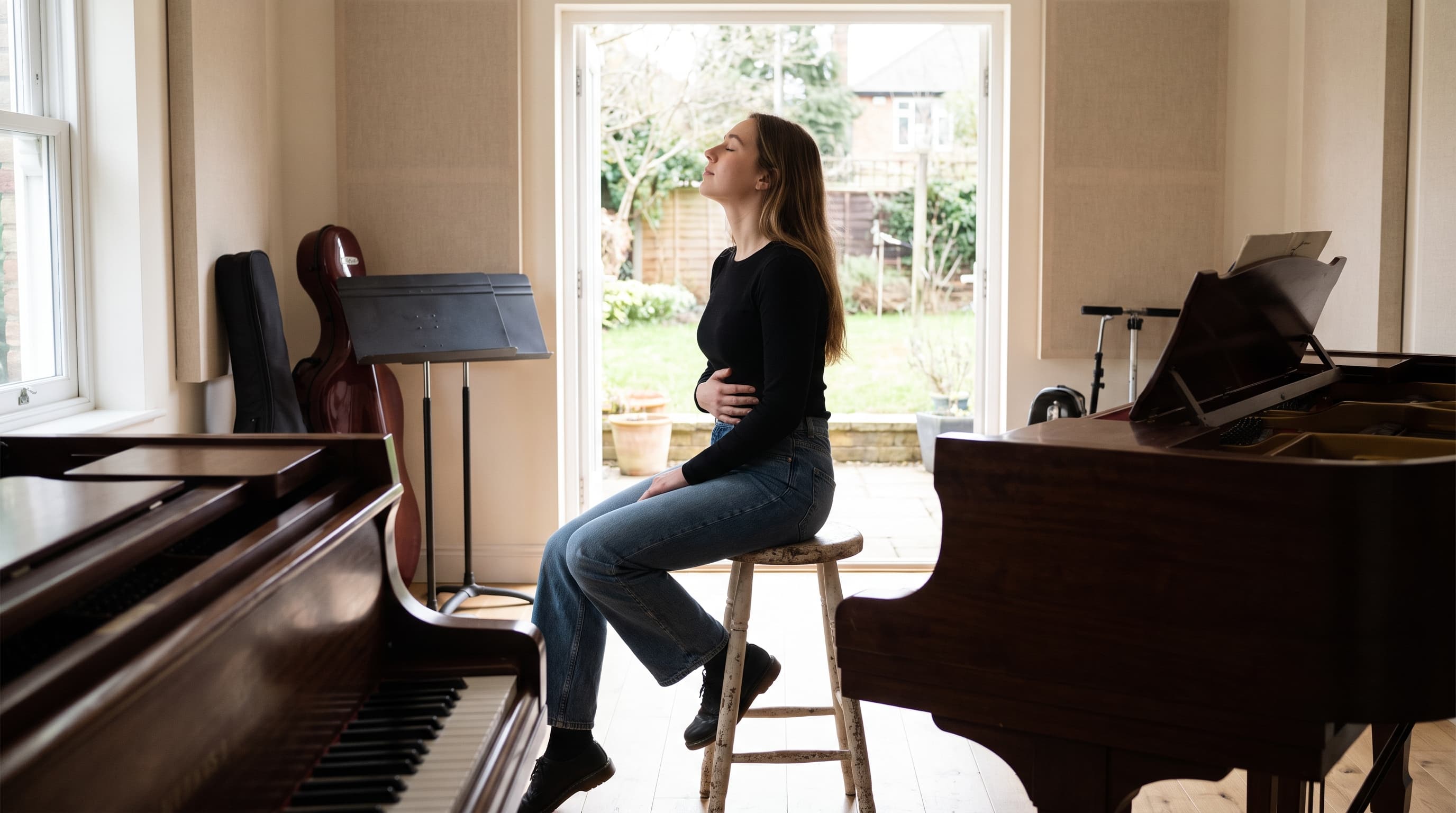
Knowing exactly where the transition happens makes practice much more efficient. It removes the guesswork from vocal warm-ups.
Core Exercises for Smooth Transitions
Vocal warm-ups build the muscle memory needed for smooth register shifts. Try these foundational techniques to bridge the gap.
Essential Blending Techniques
- Siren glides — Perform slow glides on 'ng' from low chest to high head to train continuous shifts.
- Lip trills — Use trills across the three to five note passaggio zone to encourage balanced airflow.
- Descending scales — Start from a comfortable head voice and work downward to strengthen the blend.
- Session pacing — Keep focused practice to 10-15 minutes to prevent vocal fatigue.
Consistent daily repetition of these exercises yields the best long-term results. Practicing them mindfully helps vocalists avoid common technical pitfalls.
Building Mixed Voice in Real Songs
Approach the break zone with mixed intent by lightly reducing TA dominance as pitch rises. Maintain vocal connection and strong breath support throughout the phrase.
Imitate confident calling for chest strength or forward resonance on 'oo' for head voice. Testing reveals these strategies build power without strain for musical theater.
Users report rapid gains in vocal confidence and song options after incorporating them. While these methods yield excellent results, sidestepping common pitfalls keeps progress steady.
Common Mistakes and Considerations
Even highly motivated singers hit familiar snags that can cause setbacks if ignored. Realistic limitations exist, but positive navigation ensures long-term vocal wellness.
Understanding these common errors keeps practice sessions safe and effective. It helps aspiring vocalists avoid unnecessary frustration.
Pushing Chest Voice Too High
Pushing chest voice past its natural limit around E4-G4 often causes strain and vocal fatigue. Many self-teaching vocalists experience hoarseness during intense, unsupported rehearsals.
Instead of forcing volume, blend via mixed voice and diaphragmatic support for healthier results. Limit focused register work to short 10-15 minute sessions.
Watch for persistent symptoms and consider professional input from a voice teacher. This ensures singers stay on track positively and safely.
Allowing Head Voice to Turn Breathy
A weak, disconnected head voice usually stems from incomplete vocal fold closure. This improves with descending scales that carry light coordination downward.
The misconception that head voice equals falsetto overlooks how proper head voice offers a stronger tone. Musical theater performers especially benefit from forward resonance focus here.
Users report that mindfulness techniques reduce anxiety around the vocal break. This yields connected, powerful highs without excess breath.
Overlooking When to Seek Help
Ignoring red-flag signs like ongoing hoarseness after register practice is a major mistake. Seeking guidance from an ENT or speech-language pathologist provides personalized safety.
Genre applications differ greatly, such as belting in contemporary music versus classical head voice traditions. Considerations include individual passaggio variation by voice type and intensity.
Consistent, positive practice paired with proper technique helps singers sustain enjoyable progress. These insights prepare readers to answer their most pressing register questions with confidence.
FAQ
Is head voice the same as falsetto?
Head voice maintains firmer vocal fold closure for a connected, stronger tone. Falsetto is often much breathier with incomplete closure according to physiological studies.
A simple sensory test using resonance feedback helps identify the physical difference. Gentle 'oo' exercises easily strengthen the head voice connection.
Users report clearer, stronger highs after regular targeted practice. This technique aids musical theater and pop singers aiming to expand their range safely.
How do I stop my voice from cracking at the break?
The break acts as a trainable muscle coordination shift rather than a fixed wall. The passaggio typically spans just three to five notes depending on the singer.
Slow siren glides on 'ng' for 10-15 minutes daily smooth out these rough transitions. Lip trills also encourage steady airflow through the gap.
A mixed voice intent prevents cracks by reducing chest weight as pitch rises. Positive results include seamless performances once breath support is prioritized.
How can I strengthen a weak breathy head voice?
Proper head voice should not sound breathy because the vocal folds achieve sufficient closure. Use descending scales starting in light head coordination to fix this.
Carry this coordination downward while focusing entirely on forward mask resonance. Electroglottography research shows that vocal fold closure improves with this targeted practice.
Users report a connected, agile tone after consistent short sessions. This boosts confidence for hitting high notes in songs without vocal fatigue.
Where should I feel vibrations for each voice?
Chest voice creates strong sympathetic vibrations in the sternum for notes below approximately 300 Hz. Head voice shifts this physical sensation to the face and head.
These vibrations act purely as feedback signals, not actual sound production sites. Test this by placing a hand on the chest during low 'Hey' sounds.
This body awareness helps aspiring singers blend registers more effectively. It guides proper technique during both warm-ups and live performances.
What is mixed voice and how do I develop it?
Mixed voice blends TA and CT muscle activity for powerful yet agile sound. It navigates across the passaggio without an audible flip.
Approach the break zone by gradually lightening chest weight while keeping vocal connection. Studies confirm this delicate coordination is entirely learnable.
Hobby vocalists find it unlocks more song choices and reduces overall strain. Users frequently report big confidence gains in musical theater and pop genres.
Can I completely eliminate the vocal break?
The break cannot be entirely removed, but it becomes inaudible through trained blending. This happens strictly in the three to five note transition zone.
Consistent siren exercises and descending scales help coordinate these registers smoothly. Research shows transition pitches vary by singing intensity and prior training.
Positive practice focused on support allows singers to move freely across their range. This eliminates noticeable cracks during live stage performances.
Are there risks to singing only in one register?
Sticking only to a heavy chest voice or a breathy head voice leads to fatigue over time. Balanced training prevents hoarseness and expands stylistic options.
Limit vocal practice sessions to 10-15 minutes initially while monitoring for strain. Users report better vocal health when both registers develop equally.
This balanced approach creates a highly flexible mixed voice. It serves singers well across rock, pop, and classical repertoires.
What daily exercises best support register blending?
Start with two to three minutes of diaphragmatic breathing to center the body. Follow this with 10-15 minutes of siren glides on 'woo' across the full range.
Add lip trills through the passaggio and practice descending head voice scales. Record these practice sessions to objectively track progress on cracks or breathiness.
These practical steps help aspiring singers build a mixed voice safely. They foster confidence for upcoming rehearsals and live performances.
Related Articles

How Long Does It Take to Learn Piano as an Adult: Your Positive 12-Month Roadmap to Songs and Brain Health
Entertainment5 min read

Best Digital Piano for Beginners in 2026: 15 Minutes Daily for Brain Health and Stress Relief
Entertainment5 min read
Head Voice vs Chest Voice: A Positive 2026 Guide to Seamless Blends for Aspiring Singers
Entertainment5 min read

Piano Chords for Beginners: 15-Minute Daily Routines for Brain Health and Playing Favorite Songs
Entertainment5 min read

Vocal Warm Up Guide: Step-by-Step Routines From 5 to 20 Minutes for Stronger Singing
Entertainment5 min read

Piano Sheet Music For Beginners: How Short Sessions Build Focus
Entertainment5 min read
Comments
(0)Leave a comment
Your email will not be published. All fields are required.