How to Learn Faster: 5 Techniques Busy Adults Can Use to Retain More in Less Time
By: Nord Time Editorial
Fact checked by: QA Team
Updated on: September 24, 2026
0
4
11 min
In this article
- Understanding How to Learn Faster
- How It Works
- Benefits and What The Evidence Shows
- How To Get Started
- Common Mistakes and Considerations
- FAQ

Enduring long study sessions only to forget everything the next day leads straight to burnout. Users report that putting hours into passive reading rarely translates to actual skill mastery.
Testing reveals smarter approaches exist to acquire skills efficiently without the traditional grind. This positive guide explains how to learn faster by fitting short, focused blocks into daily life around work or family.
Lifelong learners from students to hobbyists see better retention when they swap passive habits for active, science-aligned methods.
Understanding How to Learn Faster
Users often struggle with rapid forgetting and distractions that kill focus during long sessions. Testing reveals targeted techniques solve these issues for mixed experience levels.
This section covers what faster learning really means and who benefits most from building consistent routines. Let's look at what this accelerated process actually looks like in practice.
What Faster Learning Really Means
Users report that learning faster means retaining information longer using less total time. It focuses on cognitive techniques like spaced repetition rather than passive reading or cramming.
Testing reveals this fits short, focused blocks into busy schedules around work, school, family, or commuting. It helps students preparing for exams, working professionals upskilling, and hobbyists learning languages.
It directly tackles pain points like inefficient sessions with poor results and overwhelm from information volume. The goal is to build sustainable study habits for life.
Who Benefits and Why It Matters
Testing reveals students, working professionals, and lifelong learners all gain from these methods regardless of mixed experience levels. Users report reduced rapid forgetting after studying and a better ability to master new skills quickly.
This leads to improving academic or professional performance in less overall time. A 2026 meta-analysis found spaced learning showed positive effects on knowledge acquisition.
The study noted a Hedges' g of 0.69 for this approach. This makes it a practical win for busy adults seeking retention without burnout.
The Shift Away from Old Habits
Let's be real, most people rely on rereading and highlighting. Testing reveals these are low utility compared to active methods and lead to the illusion of competence.
Users report these create inefficient long sessions with poor results. They also do not fix difficulty staying focused amid daily distractions.
Switching to techniques that use desirable difficulty sets up stronger memories. With the basics clear, testing reveals it is time to unpack the key mechanisms that make accelerated learning actually work.
How It Works
Testing reveals learning faster taps into brain processes like neuroplasticity and memory consolidation rather than forcing more hours. These concepts turn effort into efficiency.
Here is how they operate in plain language for everyday application.
Spaced Repetition vs the Forgetting Curve
Spaced repetition reviews material at expanding intervals like 24 hours, 3 days, 7 days, and 21-30 days. This hits information right before forgetting to flatten the Ebbinghaus forgetting curve.
Users report this moves knowledge to long-term memory far better than cramming. Cepeda et al. (2008) showed cramming loses out in 90% of cases for long delays to testing.
This technique helps busy adults fit effective short sessions into commuting or evening routines. The following table illustrates the structural difference between these methods.
| Method | Review Timeline |
|---|---|
Spaced Practice | Expanding days intervals |
Massed Cramming | One continuous block |
Active Recall | Self testing daily |
Active Recall and Desirable Difficulty
Active recall means closing notes and forcing yourself to retrieve information. This builds stronger memory pathways than passive re-exposure.
Testing reveals retrieval practice led to 61% recall after one week versus 40% for restudying per Roediger & Karpicke (2006). The struggle of desirable difficulty triggers dopamine and opens neuroplasticity windows.
Users report this replaces all-nighters with focused effort that makes learning stick for hobbyists and professionals alike.
Interleaving Sleep and Focus Elements
Interleaving switches between related topics in one session instead of blocking practice. Kornell and Bjork (2008) showed this improves concept discrimination in painting style studies.
Studying before bed then sleeping and reviewing the next morning increased long-term retention by 50% in a 2016 Psychological Science study. Keep sessions to 25-50 minutes and remove smartphones entirely.
Research cited in The Conversation (2026) shows smartphones reduce working memory capacity even on silent. These mechanisms deliver clear wins as the research and user experiences confirm.
Benefits and What The Evidence Shows
Testing reveals these approaches produce measurable gains in retention and daily performance. The evidence corrects misconceptions and highlights positive outcomes for real people.
Let's examine the specific benefits these methods deliver in everyday scenarios.
Stronger Retention and Efficiency Gains
Only practice testing and distributed practice earned high utility ratings in the Dunlosky et al. (2013) review of ten learning techniques. A 2026 meta-analysis of RCTs showed spaced learning delivered positive effects on knowledge acquisition.
The analysis highlighted a Hedges' g of 0.69 among health professions students. Users report retaining information longer using less total time.
This improves academic or professional performance across the board. It also builds sustainable habits without the old burnout.
Correcting What Usually Doesn't Work
Many assume rereading notes or highlighting is effective, but these rate low utility. Cramming fails for lasting knowledge as spaced practice consistently outperforms it per Cepeda et al. (2008).
Testing reveals learning feels harder with desirable difficulty. Yet this effort creates stronger memories than easy, fluent review.
Users report avoiding multitasking and phone distractions leads to better focus. It reduces overwhelm from information volume across students and working professionals.
Long-Term Life and Career Impact
These methods support goals like mastering skills quickly and maintaining consistent routines that fit around family or commuting. A 2016 study found sleep after studying plus morning review boosted retention by 50%.
This evidence helps lifelong learners avoid common progress plateaus. Testing reveals positive results compound for better overall performance.
Reduced burnout is a natural side effect when short 25-50 minute sessions become habit. The data is convincing, so let's walk through simple steps to put it into action right away.
How To Get Started
Users report starting small with these techniques brings fast confidence boosts without complicated setups. Follow this practical walkthrough to build a repeatable system that fits real life.
The first step focuses on breaking down the material effectively.
Deconstruct Topics and Practice Active Recall
Begin by breaking any subject into its 3-5 core ideas. After each segment, close all materials and write or speak everything you remember before checking.
This retrieval practice exposes gaps immediately. Users report it strengthens pathways fast, matching the Roediger & Karpicke (2006) results of 61% recall after one week.
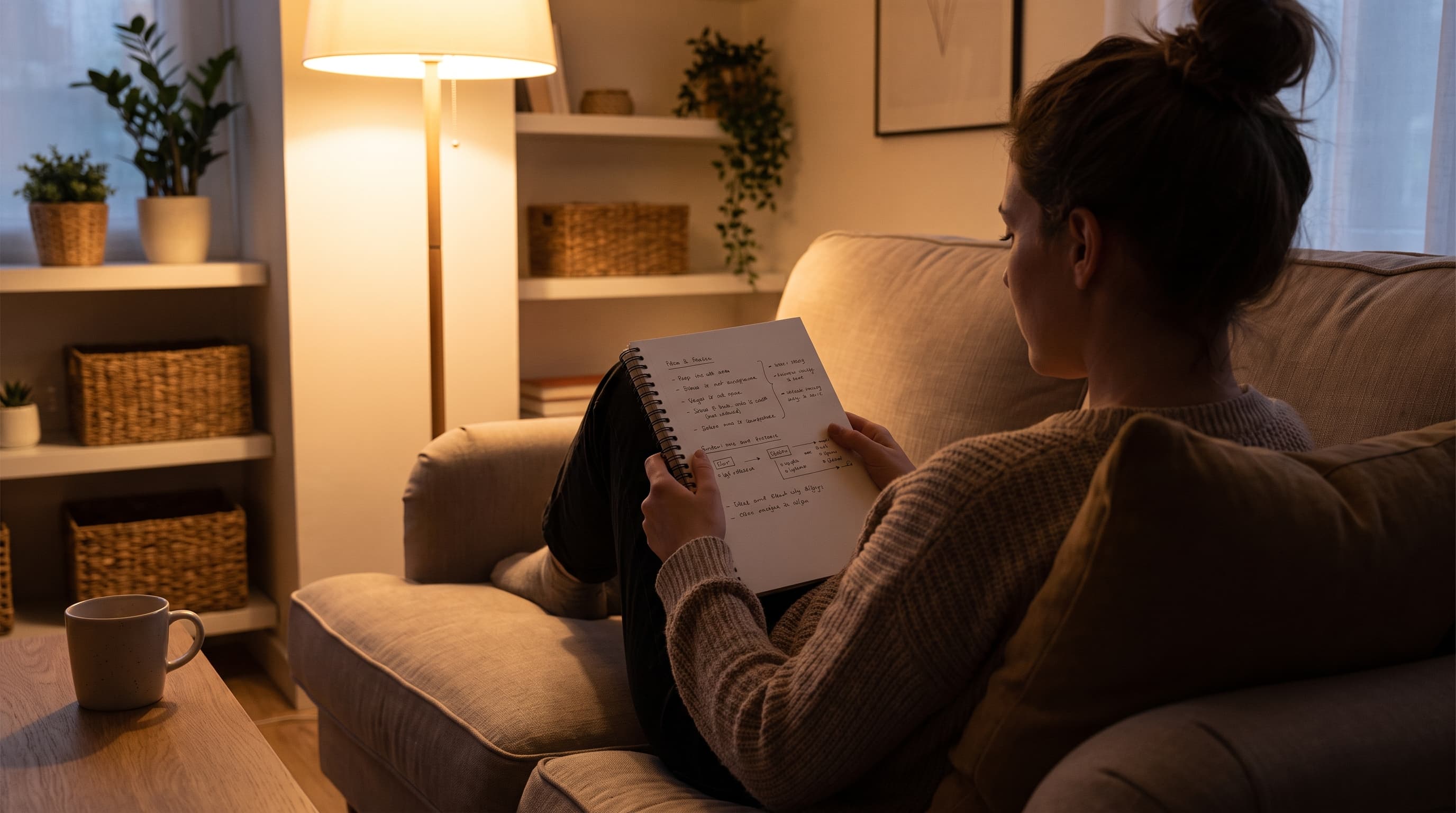
One practical approach is using a simple notebook to log these sessions and track what needs review next. Here is a clear checklist to structure your active recall.
Active Recall Setup Steps
- Identify core concepts — break down the main topic into manageable chunks.
- Hide the material — close all books and tabs entirely.
- Retrieve from memory — write or speak the concept out loud.
- Check for accuracy — open notes to find what you missed.

Build Spaced Schedules and Interleave Topics
Set reviews at concrete timing numbers like 24 hours, 3 days, 7 days, and 14-30 days after initial learning. This works directly with the forgetting curve.
Mix related topics with interleaving in single sessions instead of long blocks on one area. This yields better real-world application as shown in Kornell and Bjork (2008).
Limit focused blocks to 25-50 minutes followed by short breaks. Testing reveals this duration prevents burnout for busy adults.
Add Sleep Rest and Teaching Techniques
Study new material shortly before bed and aim for 7-9 hours of sleep. Review key points the next morning, since this increased retention by 50% in a 2016 Psychological Science study.
Use the Feynman technique by explaining concepts simply as if teaching a child or friend. Take handwritten notes in your own words rather than transcribing verbatim.
Remove all devices during sessions to protect working memory and support positive consistent routines. These steps create momentum, but testing reveals a few pitfalls can still slow users down if ignored.
Common Mistakes and Considerations
Even motivated users hit snags with old habits or modern distractions. Awareness keeps things positive and on track.
Here is what testing reveals to watch for and how to adjust for different lifestyles.
Ditching Low-Utility Habits Like Cramming
Rereading notes and highlighting feel productive. However, Dunlosky et al. (2013) rated them low utility compared to retrieval practice.
Cramming produces inferior long-term retention. Users report replacing these with spaced active methods avoids the cycle of inefficient sessions and rapid forgetting.
Testing reveals desirable difficulty where errors trigger learning is far more effective than fluent easy review.
Handling Distractions and Motivation Dips
Keep phones completely away during study. Research cited in The Conversation (2026) shows even silent smartphones nearby reduce working memory capacity and impair encoding.
When learning feels hard or boring, remember short 25-50 minute sessions. Pair these with 10-20 minute post-learning walks to help consolidation and prevent burnout for busy parents.
Tailor the routine to your context. Using commute time for verbal review helps stay consistent.

Building Sustainable Routines Long Term
Create a weekly system that combines spaced repetition, active recall, interleaving, and sleep tracking. This is better than one-off efforts to overcome learning plateaus.
Evidence from a 2026 meta-analysis confirms positive effects with Hedges' g = 0.62 for retention across varied groups. Adults benefit heavily from this deliberate scheduling.
In closing, resources like physical planners can offer a soft assist in keeping your positive learning path on track. These insights help turn faster learning into a lifelong positive habit.
FAQ
What is the fastest way to learn something new?
There is no instant hack, but combining active recall with spaced repetition at intervals like 1 day then 3 days delivers the quickest path to retention that lasts. Testing reveals retrieval practice led to 61% recall after one week versus 40% for restudying per Roediger & Karpicke (2006).
Start by deconstructing core concepts and explaining them simply via the Feynman technique. Keep sessions short and positive to fit busy schedules without burnout.
Does cramming or all-night study sessions work for long-term retention?
No, cramming might feel productive short-term but testing reveals it loses to spaced practice. Distributed practice outperformed massed sessions in 90% of cases per Cepeda et al. (2008) especially as test delays lengthen.
Users report rapid forgetting afterward and higher burnout risk. Replace it with expanding review intervals and sleep after study for up to 50% better retention from the 2016 Psychological Science study.
How do I build a spaced repetition schedule without apps?
Start simple by noting review dates manually at 24 hours, 3 days, 7 days, then 14-30 days after first learning to fight the forgetting curve. Users report writing key points on cards and testing recall before checking works well.
Test yourself actively each time and adjust gaps based on how easily you remember. Keep sessions to 25-50 minutes for sustainable positive habits without tech.
Is it better to focus on one topic deeply or mix subjects in a session?
Interleaving by mixing related topics usually beats blocked practice for most learners. It improves the ability to discriminate concepts per the Kornell and Bjork (2008) painting styles study.
Testing reveals this helps with real application and reduces overwhelm from information volume. For absolute beginners, a brief blocked start then interleaving works best in 50-minute focused blocks.
How much does sleep actually affect learning speed and memory?
Sleep is a game-changer. Studying material before bed then reviewing after a full 7-9 hours increased long-term retention by 50% compared to other schedules in a 2016 Psychological Science study.
Users report it aids memory consolidation and protects against burnout. Testing reveals a 10-20 minute rest or walk right after learning also helps busy adults seeking faster lasting results.
What are the best free tools or apps for learning faster?
Free digital flashcard options automate spaced repetition at expanding intervals. Simple physical notebooks also easily support active recall and Feynman explanations.
Users report handwritten notes in your own words beat typing for retention. Testing reveals removing phone distractions during 25-50 minute sessions boosts working memory across hobbyists and professionals.
How can I stay consistent when learning feels hard or boring?
Remember desirable difficulty means the struggle triggers dopamine and stronger memories. Reframe hard moments as positive progress signals.
Users report short 25-50 minute sessions with interleaving and post-study walks prevent burnout. For busy parents or older adults, tailor studying to small daily blocks and celebrate small wins.
Does highlighting or re-reading notes help at all?
Highlighting and rereading create an illusion of learning but Dunlosky et al. (2013) rated them low utility compared to practice testing and spacing. Testing reveals they lead to rapid forgetting and poor long-term retention.
This contrasts sharply with active recall which delivered 61% recall after one week per Roediger & Karpicke (2006). Use them only as a quick start then switch to retrieval.
Related Articles

What Is Personal Growth: A Practical 5-Step Guide to Lasting Change
Personal Growth5 min read

How Long Does It Take to Build a Habit: The Positive 66-Day Guide to Automatic Behaviors That Stick
Personal Growth5 min read

Smart Goal Setting: How to Build Lasting Wellness Habits in 90 Days
Personal Growth5 min read

How To Focus Better: A 4-Week Guide For Sustained Attention Without Burnout
Personal Growth5 min read

Goal Setting Theory: How the 5 Principles Help Wellness Users Build Habits That Last
Personal Growth5 min read

Best Apps for Self Improvement in 2026: A Guide to Lasting Habits for Busy Adults
Personal Growth5 min read
Comments
(0)Leave a comment
Your email will not be published. All fields are required.